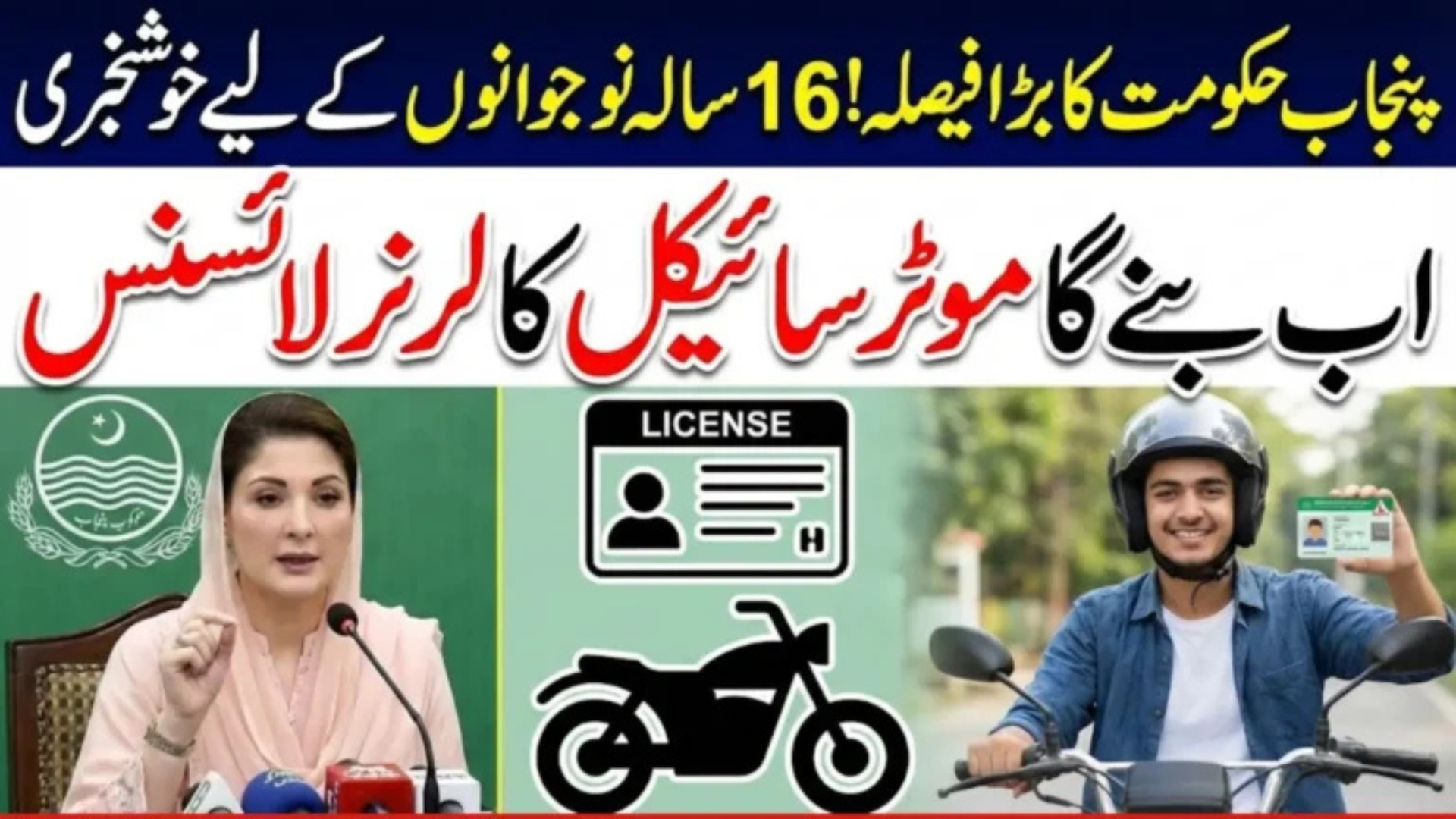

16-Year-Olds in Punjab to Get Motorcycle Licenses. The Government of Punjab has officially decided to issue motorcycle licenses and smart cards to 16-year-olds, marking a major shift in provincial traffic policy. This announcement comes directly from the Punjab Chief Minister Office, following intense public criticism over the recent traffic crackdown across the province.
For the past several days, Punjab experienced strict enforcement on underage riding, resulting in over 4,600 cases and nearly 3,100 arrests within just 72 hours—many of them schoolchildren. Parents, civil society, and education groups raised concerns, calling the arrests unfair, alarming, and damaging for minors’ futures.
This new decision aims to correct the situation and create a more responsible, safe, and youth-friendly system for young riders in Punjab.
Why the Punjab Government Changed the Policy
Public Backlash Over Student Arrests
Thousands of parents strongly opposed the crackdown, arguing that:
- Schoolchildren were being treated like criminals
- Arrests could create long-lasting negative records
- Traffic police were using excessive force
- Students lacked awareness, not intention to break the law
This pressure pushed the government to revisit its strategy.

CM Maryam Nawaz Sharif’s Response
Chief Minister Maryam Nawaz Sharif expressed strong displeasure after seeing reports and videos of minors being handcuffed for traffic violations.
She stated:
The goal is not to arrest children but to ensure they follow traffic laws through awareness and guidance.
New Policy: Motorcycle Licenses for 16-Year-Olds
The provincial government has now approved issuing motorcycle driving licenses and smart cards to teens aged 16 and above.
Key Highlights of the New License Policy
- 16-year-olds will now be officially eligible for motorcycle licenses
- Smart cards will be issued to young licence holders
- Traffic police will begin educational and awareness campaigns in schools and colleges
- First-time offenders without helmets will receive warnings instead of fines
- Police will promote road safety lessons for young riders
This step aims to bring teenagers into the legal system rather than forcing them to ride unlicensed.

Awareness Week Across Punjab Schools
Traffic police have been instructed to launch a province-wide awareness week. This campaign will:
- Educate students about road safety
- Provide helmet awareness sessions
- Teach basic and advanced traffic rules
- Demonstrate safe riding techniques
The government believes that education is more effective than punishment, especially for minors.
Use of Drones and Body Cameras for Transparency
Punjab Police will also introduce new technology to improve enforcement:
Drones will monitor traffic violations
This helps capture real-time evidence and prevents discrimination.

Body cameras for traffic wardens
This ensures transparency, accountability, and fairness in the field.
Why This Decision Matters for Families and Students
1. Prevents Criminalization of Minors
Young riders will no longer face the risk of harsh penalties or arrest records.
2. Promotes Safer Roads
Allowing supervised licensing ensures teens receive proper training and follow rules.
3. Encourages Helmet Use
Instead of fines, teens will be guided and educated about helmet safety.

4. Builds Trust Between Police and Youth
The shift from punishment to awareness creates a healthier environment.
Parent’s Responsibility Highlighted
CM Maryam Nawaz emphasized that parents play a central role in shaping their children’s driving habits. She urged parents to:
- Teach road safety at home
- Ensure their children always wear helmets
- Stop minors from reckless riding
- Explain the long-term risks of unsafe driving
The Chief Minister said the core issue is lack of guidance, not deliberate violation.
What Happens Next?
The government will soon begin:

- Setting up fast-track counters for 16-year-old applicants
- Issuing new smart motorcycle licenses province-wide
- Conducting training sessions in schools and colleges
- Regular drone-based monitoring to improve safety
Traffic rules will still apply, but enforcement will be educational and supportive instead of punitive.
Conclusion
Punjab’s decision to allow 16-year-olds to obtain motorcycle licenses and smart cards marks a significant policy shift driven by public concern and the need for balanced enforcement. By replacing harsh penalties with awareness, guidance, and modern monitoring methods, the government aims to create safer roads while protecting the future of young riders.