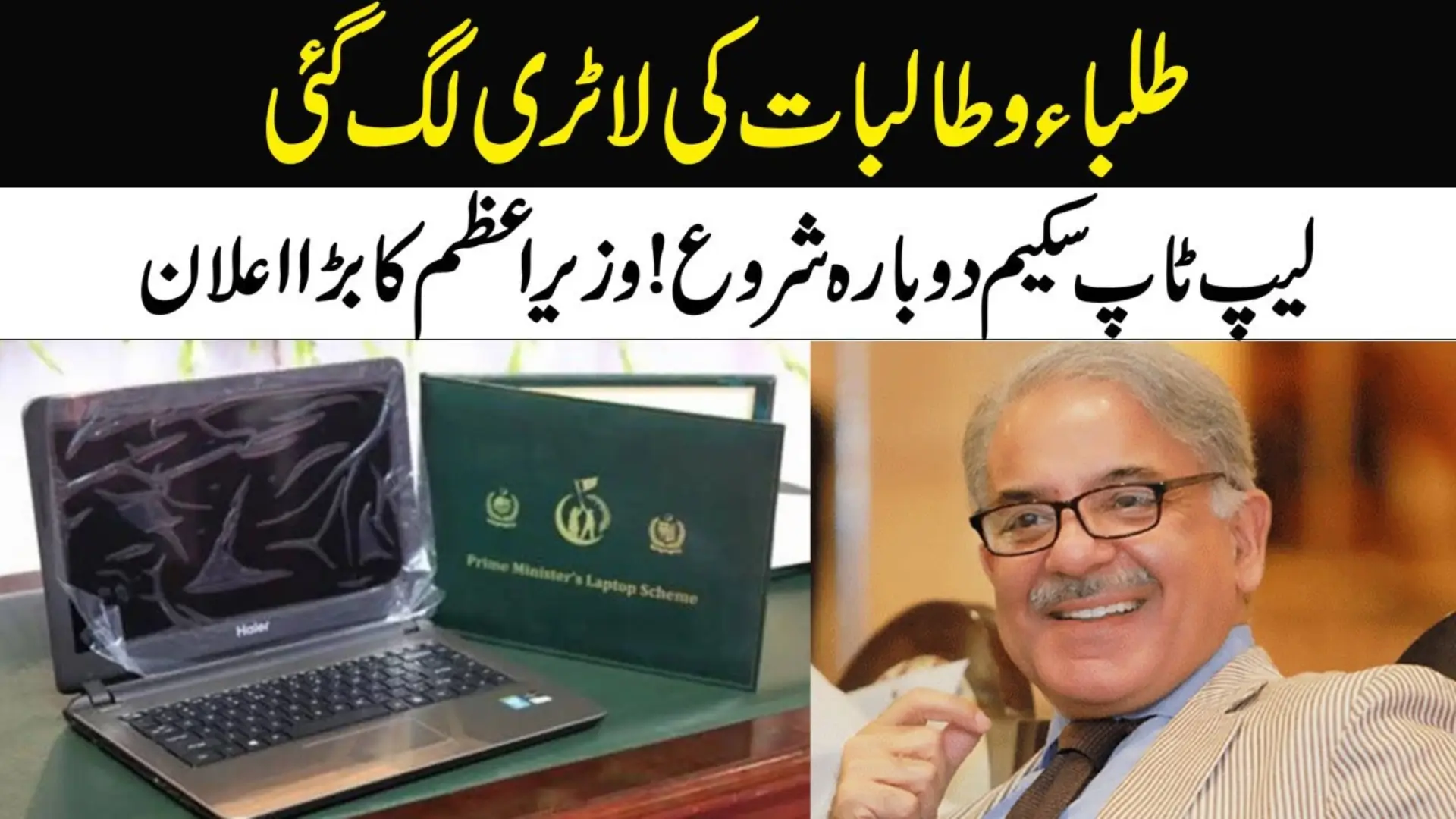

Expands Laptop Scheme 2026. The federal government has announced a major expansion of the Prime Minister’s Laptop Scheme 2026, delivering a strong boost for students across Pakistan. Under this latest decision, Prime Minister Shehbaz Sharif has approved a significant increase in the laptop quota for students in Balochistan, raising it from 10,000 to 18,000 laptops.
The announcement reflects the government renewed focus on youth empowerment, digital inclusion, and equal educational opportunities under the Prime Minister’s Youth Program (PMYP). Officials say the move will help bridge long-standing gaps in access to technology for students in underdeveloped regions.
Major Upgrade to The Prime Minister Laptop Scheme 2026
The increase in quota was announced by Rana Mashhood Ahmed Khan, Chairman of PMYP, during the inauguration of Artificial Intelligence and Cybercrime courses in Quetta.
He said the decision sends a clear message that Pakistan’s youth are central to the country’s future growth. According to him, expanding access to laptops is not just about distributing devices. It is about preparing students for a digital economy driven by skills, innovation, and technology.

Federal Vision: Empowering Youth Through Technology
The federal government views digital education as a key pillar of national development. By expanding the laptop scheme, authorities aim to ensure that students from all provinces can compete on equal footing.
Officials highlighted that many talented students in Balochistan face barriers due to limited access to digital tools. The expanded quota directly addresses this challenge and supports a more inclusive education system.
Key Objectives of The Laptop Scheme 2025
| Objective | Description |
|---|---|
| Digital Inclusion | Ensure students from all regions, especially underserved areas, access modern technology |
| Youth Empowerment | Reduce educational gaps and promote innovation among students |
| Skill Development | Encourage learning in AI, cybersecurity, and emerging technologies |
| Employment Readiness | Prepare students for local and global digital job markets |
PM Shehbaz Sharif Commitment to Equal Opportunities
Prime Minister Shehbaz Sharif has repeatedly stressed that no province should be left behind in Pakistan’s digital transformation. Increasing the laptop quota for Balochistan reflects this inclusive approach.

Through this initiative, thousands of students will gain tools that support academic learning, professional growth, and entrepreneurship. The government believes technology access can unlock new opportunities for research, freelancing, and startups.
Focus on Artificial Intelligence and Cybersecurity Training
The laptop quota announcement coincided with the launch of AI and Cybercrime courses under PMYP. These programs aim to equip students with future-ready skills.
Highlights of the Training Initiative
- Practical learning in artificial intelligence and digital forensics
- Collaboration with universities and IT institutions
- Focus on ethical hacking, data protection, and problem-solving
- Support for innovation-driven student startups
Pakistan has also introduced a National Artificial Intelligence Policy, aligning education with global technology trends.

Turning Students Into Job Creators
A core goal of the Prime Minister’s Youth Program is shifting youth from job seekers to job creators. The laptop scheme works alongside other initiatives, including:
- Startup support grants for young entrepreneurs
- Interest-free youth business loans
- Digital skills training through e-learning programs
- Scholarships and internships in partnership with higher education bodies
Together, these efforts ensure laptops become tools for productivity and income generation.
Agriculture and Tech Startups in Balochistan
Government officials also emphasized combining agriculture with technology to strengthen regional economies. Several agri-tech startups in Balochistan are already using digital tools to improve productivity.

| Sector | Initiative | Impact |
|---|---|---|
| Agriculture | Smart irrigation and crop monitoring | Higher yields and efficiency |
| Technology | Software and app development | Local employment |
| Education | Digital learning platforms | Better access for rural students |
| Entrepreneurship | Youth innovation challenges | Self-employment growth |
Expanding Global Job Opportunities for Youth
Under PM Shehbaz Sharif’s direction, the NewTech Fund has been expanded to support international employment pathways. Training and certification programs now prepare youth for jobs in countries such as the UAE, Saudi Arabia, Canada, and Europe.
The government aims to increase foreign exchange earnings by enabling skilled Pakistani youth to secure high-demand digital roles abroad.
Why the Laptop Quota Increase Matters
Many students in remote areas struggle with online learning due to lack of equipment. Increasing the quota from 10,000 to 18,000 laptops ensures more equal access.

Key Benefits for Students
- Participation in online classes and virtual internships
- Improved research and academic performance
- Skills in coding, AI, and cloud computing
- Access to freelancing and remote work opportunities
How to Apply for the Prime Minister Laptop Scheme 2026
Students interested in upcoming distribution phases can follow these steps:
- Visit the official PMYP or HEC portal
- Sign up or log in with student credentials
- Enter CNIC and academic details
- Upload required documents
- Submit the application before the deadline
Students are advised to confirm eligibility through their university focal persons.
Government Broader Digital Pakistan Vision
The laptop scheme supports wider Digital Pakistan initiatives, including:
- National Freelancing Program
- E-Rozgar training centers
- Pakistan Startup Fund
- Digital literacy campaigns
Together, these programs aim to position Pakistan as a regional technology hub.
Conclusion
The expansion of the PM Shehbaz Laptop Scheme 2026 marks a major step toward digital equality in Pakistan. By increasing the quota for Balochistan, the government has reinforced its commitment to empowering youth, reducing regional disparities, and building a future-ready generation. This move strengthens the foundation for a smarter, more inclusive, and self-reliant Pakistan.